Readings already normal
You are below 120/80, you want to stay there, and you are treating this as nutritional support alongside diet, exercise and sleep — not instead of them.
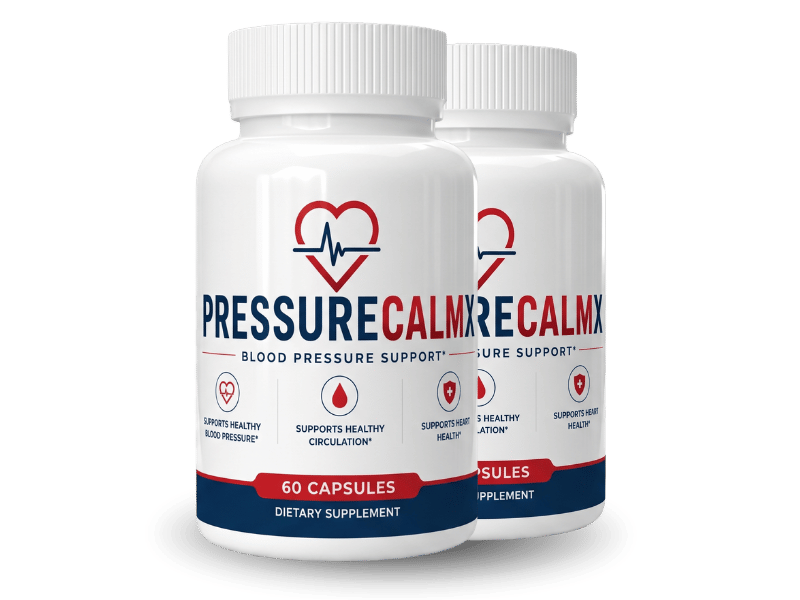
PressureCalmX® is a daily dietary supplement formulated with a science-informed blend of heart-healthy botanicals to support blood pressure already within the normal range, healthy circulation, and overall cardiovascular wellness.
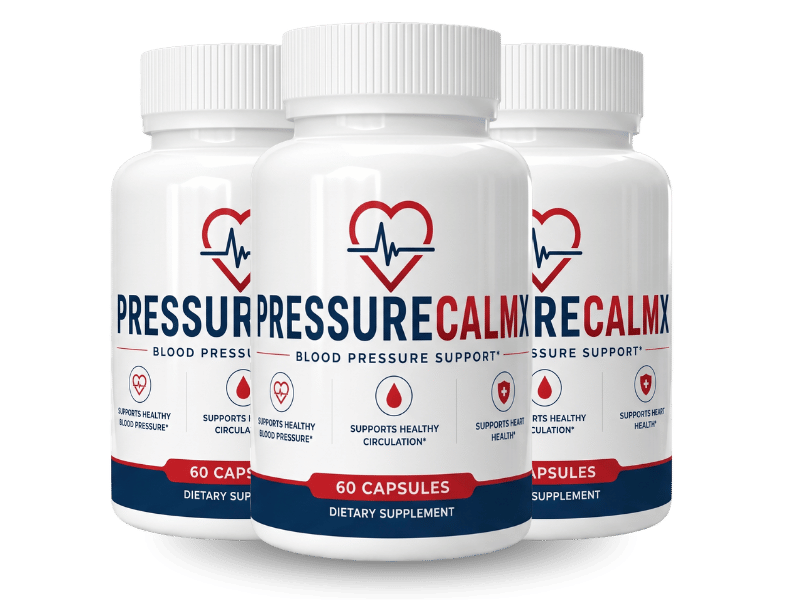
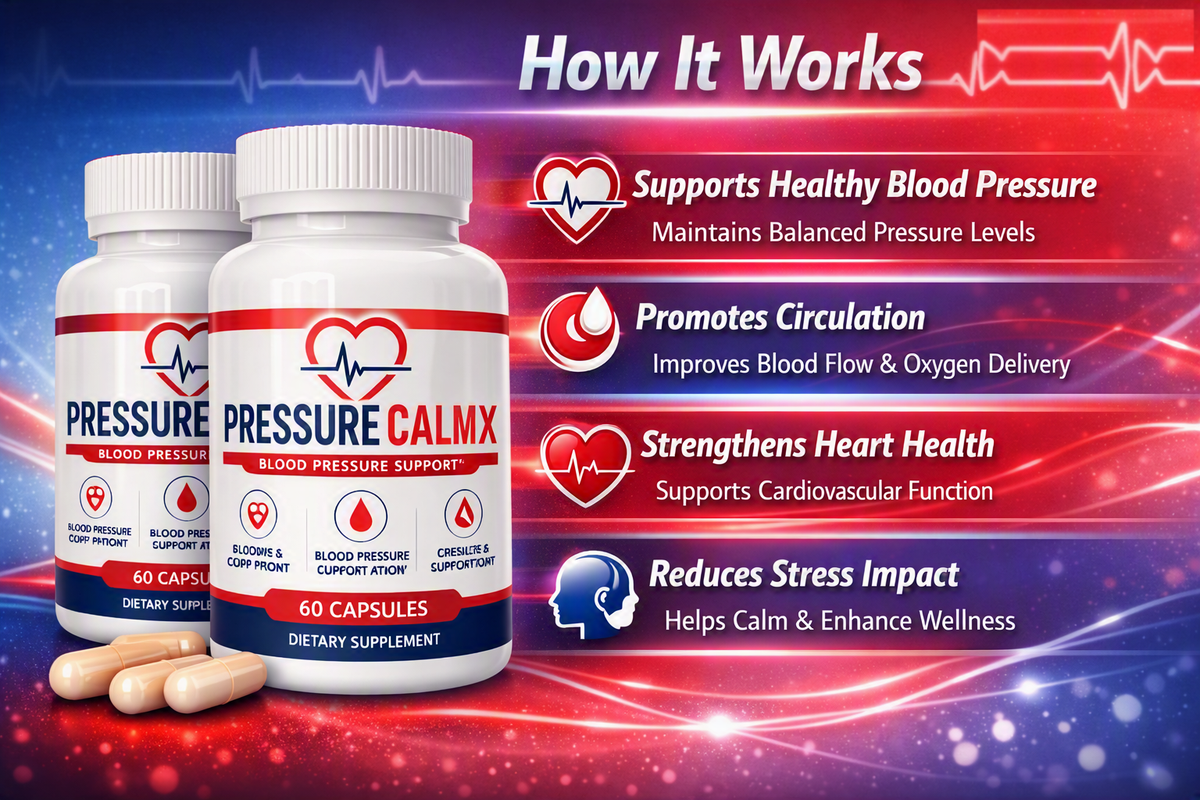
PressureCalmX is a twice-daily capsule supplement marketed to support blood pressure already within a normal range, healthy circulation and cardiovascular wellness in adults. Each bottle holds 60 capsules at two per day, making one bottle a 30-day supply. The formula is a proprietary blend of eight botanicals — Hawthorn Leaf & Flower, Hibiscus Flower, Garlic Bulb, Olive Leaf, Green Tea, Buchu Leaf, Uva Ursi Leaf and Juniper Berry — fortified with Vitamin C, Vitamin B6 and Vitamin B12.
It is a dietary supplement rather than a medicine, and it is not FDA-approved. Packages run $138 to $294 with a 60-day money-back guarantee counted from purchase date, and the seller suggests a 90-day trial. Three of the eight botanicals have real cardiovascular research behind them; three others are traditional urinary and diuretic herbs with essentially none.
Before anything else. High blood pressure is usually symptomless — you cannot feel it, which is exactly why it is dangerous. PressureCalmX is marketed to support blood pressure already within a normal range. That legal phrasing matters: it is not a treatment for hypertension and it is not a substitute for antihypertensive medication. Never stop, reduce or delay prescribed medication in favour of a supplement, and if you have been diagnosed with high blood pressure, any supplement decision belongs in a conversation with your doctor or pharmacist first.
Strip away the marketing and the proposition is simple: two capsules containing a botanical blend and three vitamins, taken daily for months rather than days, aimed at adults who want to be proactive about heart health. It sits in the wellness-support corner of the cardiovascular market, which means it is designed to be taken as a routine rather than felt as an event.
What it is not is a treatment for high blood pressure. The phrase used across this category — “supports healthy blood pressure already within a normal range” — is a structure-function claim, and the qualifier is doing real work. A product making that claim is explicitly telling you it is for people whose readings are already fine. If yours are not, this is the wrong aisle, and our page on what PressureCalmX is works through that distinction in detail.
The selection is not cynical. Hawthorn, hibiscus and garlic are among the most researched botanicals in cardiovascular medicine, and putting all three in one capsule is a defensible formulation choice. What we take issue with is everything that surrounds them — the false FDA badge, three urinary herbs presented as cardiovascular support, no published doses, and no interaction warnings anywhere.
More useful than any ingredient list: find your reading on the scale below. It determines whether a supplement is a reasonable idea or a dangerous distraction.
Categories follow the American Heart Association / American College of Cardiology classification. A reading above 180/120 is a hypertensive crisis and needs emergency medical attention, not a supplement. If your readings sit in Stage 1 or Stage 2, this product is not the intervention you need — that is a conversation with a doctor.
You are below 120/80, you want to stay there, and you are treating this as nutritional support alongside diet, exercise and sleep — not instead of them.
This is exactly where lifestyle change has proven benefit and where medical guidance matters. A supplement may still be reasonable, but not as your plan.
You need medical management. Several ingredients here interact with antihypertensives and diuretics, so this becomes a safety question rather than a shopping one.
The meter on each row measures one thing: how much published human research supports that ingredient for cardiovascular outcomes — not for urinary health, not for antioxidant capacity in a test tube. Four rows score well. Three barely register, and we explain why they are in the bottle at all.
The most credible cardiovascular botanical in the blend. Hawthorn has been studied in randomised trials, mostly for chronic heart failure symptoms rather than blood pressure specifically, and it contains flavonoids and oligomeric procyanidins with genuine vascular activity. It also has documented interactions with digoxin and with blood pressure medication, which is precisely why it should not be taken casually.
Among the few botanicals with human trials measuring blood pressure as the actual endpoint. Studies typically used hibiscus tea brewed from several grams of dried calyx daily over weeks, and reported modest average reductions. The dose question matters enormously here: a capsule fraction of an extract is not the same as three cups of strong tea a day.
One of the most researched botanicals in cardiovascular medicine. Meta-analyses of aged garlic extract have reported modest average blood pressure reductions, generally in people with elevated readings at baseline. Allicin content and preparation method change the result considerably, and garlic meaningfully affects platelet function.
Oleuropein is a well-characterised polyphenol with real vascular research behind it, including small human trials on blood pressure. The evidence base is thinner than hawthorn, hibiscus or garlic, but it is genuinely on-topic rather than borrowed from another field.
Catechins including EGCG have a large general cardiovascular and metabolic literature. Effects on blood pressure specifically are small and inconsistent across trials. Concentrated extracts also carry cautions that a cup of tea does not, including interactions with several drug classes.
Involved in normal collagen formation, which is a real part of blood vessel structure. Supplementation trials for blood pressure have produced small and inconsistent effects in people who are not deficient. A legitimate nutrient, not a blood pressure intervention.
A genuine cofactor in homocysteine metabolism and neurotransmitter synthesis. Correcting a deficiency restores normal function; taking more than you need does not push healthy cardiovascular function above baseline.
Essential for nerve function and red blood cell formation, and worth supplementing if you are over sixty, on metformin or a proton pump inhibitor, or eating a plant-based diet. Its presence here is reasonable nutrition rather than a blood pressure mechanism.
This is a traditional urinary-tract and diuretic herb, not a cardiovascular one. It has essentially no blood pressure research behind it. Its presence is defensible only through the loose reasoning that fluid loss lowers pressure — which, if you already take a prescription diuretic, is a reason for caution rather than a selling point.
A traditional urinary antiseptic containing arbutin and hydroquinone precursors. It has no cardiovascular evidence base, and herbal references generally advise limiting use to short courses rather than continuous daily intake because of hepatotoxicity concerns. Seeing it in a supplement designed for indefinite daily use is the finding that most surprised us.
Another traditional diuretic, with antioxidant content but no meaningful blood pressure literature. It is generally avoided in pregnancy and in people with kidney disease. Like buchu and uva ursi, it belongs to a urinary formula rather than a cardiovascular one.
The proprietary blend problem. These actives are grouped under a single blend without individual milligram amounts published. Ingredients in a blend must be listed in descending order by weight, so you get a ranking — but the first ingredient could account for most of the blend while the last few contribute a trace, and the label reads identically either way. This matters more here than in most categories: the hibiscus trials that reported blood pressure effects used several grams of dried calyx daily, and the garlic meta-analyses used standardised aged extract at defined doses. Without the split, you cannot tell whether this capsule is in the same order of magnitude. Ask the manufacturer for the amounts in writing before you order — see the full ingredient breakdown.
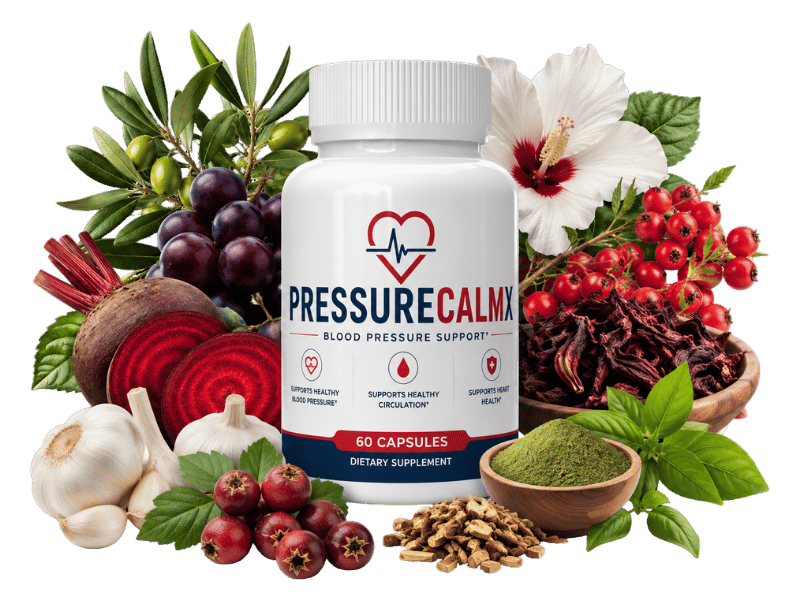
Three pathways carry the plausible part of the formula. The first is vascular tone: the polyphenols in hibiscus, olive leaf and hawthorn have been studied for effects on endothelial function and vessel dilation, and nitric-oxide signalling is the usual mechanistic story. This is where the hibiscus trials sit, and it is the most defensible route from ingredient to outcome in the whole blend.
The second is platelet and lipid behaviour, which is mostly garlic's territory. Sulfur-containing compounds including allicin have a large research base covering cholesterol, platelet aggregation and modest blood pressure effects. It is genuine cardiovascular science — and it is also precisely why garlic matters if you take an anticoagulant.
The third is antioxidant defence, from green tea catechins and Vitamin C. Reasonable as a supporting premise, weak as a primary mechanism, and heavily dose-dependent.
What does not have a pathway is the diuretic trio. Buchu, uva ursi and juniper reduce fluid volume, and the only route from there to blood pressure is the same one a prescription diuretic uses — which is a reason for caution if you already take one, not a bonus feature.
Supplement marketing promises transformation. The ingredient research supports something smaller: modest average effects, measured across weeks, in populations that were often elevated at baseline. Here is the honest version of each claim.
We ran the eight checks a sceptical buyer would run, comparing what this reference publishes against what is typically available on other PressureCalmX pages.
| Buyer check | Published here | Typical PressureCalmX page |
|---|---|---|
| “FDA approved” claim | Corrected — no supplement is | Displayed as a trust badge |
| Drug interactions | Six named, by ingredient | Not mentioned at all |
| Non-cardiac herbs flagged | Buchu, uva ursi, juniper | Described as heart support |
| Uva ursi duration limit | Stated | Omitted |
| Individual doses | Undisclosed — and we say so | Not addressed |
| Refund steps | Actual process, with caveats | “No questions asked” badge |
| “Regular price” anchor | Identified as an anchor | Presented as a real price |
| Blood pressure categories | AHA scale published | Not shown |
Reflects patterns observed across publicly accessible PressureCalmX marketing pages in August 2026. Pages change — verify current claims yourself.
“I bought the three-bottle package after finding a page that actually listed the interactions instead of pretending there were none. My readings were already normal and I wanted something alongside the walking and the salt cutback. Three months in, no complaints and no dramatic story either.”

“Four stars, not five. The capsules are large and I had stomach upset the first week until I started taking them with a proper meal instead of coffee. If you want a supplement that does something you can feel, this is not it — and honestly nothing in this category is.”

“I take a diuretic and a statin. This page was the only one that told me three of the herbs in here are diuretics too. I screenshotted the label, my pharmacist said skip it, and I did. That is worth more to me than a discount code.”

Testimonials are individual experiences and are not a guarantee of results. Portraits are illustrative stock images, not photographs of the reviewers. There is currently no independent third-party review record for PressureCalmX on platforms such as the BBB or Trustpilot — we would rather tell you that than imply a track record that does not yet exist. Read the full independent review.
The seller suggests a 90-day trial. Your refund window closes at day 60. That mismatch is the single most useful thing to know before you choose a package — and it is why the six-bottle sale price is the best per-day value and the worst first purchase.
60-day supply
$138.00 total + shipping
90-day supply
$177.00 total · free US shipping
180-day supply
$294.00 total · free US shipping





Package pricing verified 2026-08-13 against the official order page. Promotional pricing changes frequently and “regular price” figures shown on sales pages are anchors rather than prices anyone has paid — compare the per-bottle and per-day cost instead. BuyGoods may be the descriptor that appears on your card statement. Confirm your final total, including tax and shipping, before submitting your order.
The guarantee is real. The friendly summary on sales pages is not the policy text, and reading only the badge is how buyers get caught out on day 58.
The 60 days run from your purchase date, not delivery. Your order confirmation email is the record that matters. Diarise day 50.
Contact customer service in writing before you post anything back, and keep a copy. The timestamp is your evidence that you acted in time.
Sales copy in this category often says “keep everything.” BuyGoods-processed orders commonly require a return. Confirm which applies to your order.
The seller suggests 90 days of use; the guarantee covers 60. Decide inside the window that protects your money, not the one that suits the marketing.
Before you submit your order: check the checkout page for any pre-selected subscription or upsell option, and confirm the final total including shipping and tax. Note the payment descriptor may read BuyGoods rather than the brand name on your statement. Full detail on the refund policy page.
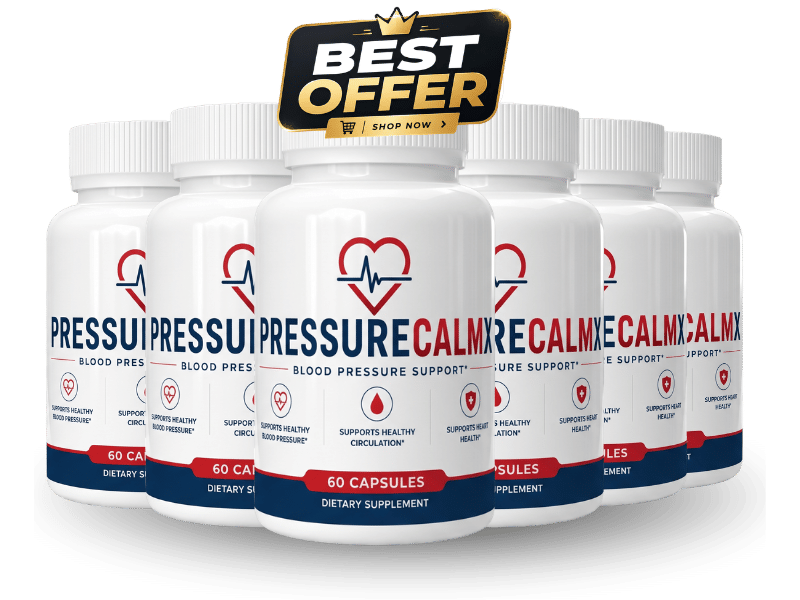
PressureCalmX is a daily capsule supplement marketed to support blood pressure already within a normal range, healthy circulation and general cardiovascular wellness in adults. The serving is two capsules daily with a meal, and each bottle holds 60 capsules — so one bottle is a 30-day supply. The formula is a proprietary botanical blend led by Hawthorn Leaf & Flower, Hibiscus Flower, Garlic Bulb and Olive Leaf, with Green Tea, three urinary herbs (Buchu, Uva Ursi and Juniper Berry), plus Vitamin C, B6 and B12. It is a dietary supplement, not a medicine, and it is not FDA-approved. Full detail on the ingredients page.
No, and no dietary supplement is. The FDA does not approve supplements the way it approves prescription drugs — there is no pre-market approval and no requirement to demonstrate efficacy before sale. There is also no such thing as an “FDA approved facility”: facilities are registered and subject to inspection, which is a different thing entirely. Any page displaying an “FDA Approved” badge on a supplement is making a claim that is not true, and that is worth knowing before you decide who to trust.
Two capsules daily with a meal. Taking it with food matters more than usual here, because concentrated garlic and green tea extracts are common causes of stomach upset on an empty stomach. The seller suggests using it consistently for at least 90 days. Store the bottle cool and dry, away from direct sunlight and out of reach of children.
Three packages are offered: two bottles at $138 total ($69 per bottle) plus shipping; three bottles at $177 total ($59 per bottle) with free US shipping; and six bottles at $294 total ($49 per bottle) with free US shipping. That works out at roughly $3.93 a day on the two-bottle package and $1.63 a day on the six. Sales pages frequently show a “regular price” of $179 per bottle — treat that as an anchor rather than a price anyone has ever paid, and compare per-bottle figures instead. Current pricing is on the PressureCalmX official website.
It is not permitted to claim that, and you should be sceptical of any page that does. The legal phrasing used across this category is “supports healthy blood pressure already within a normal range,” which is a structure-function claim rather than a treatment claim. Three of the botanicals — hawthorn, hibiscus and garlic — do have human research reporting modest average blood pressure effects. But those trials used specific doses of specific preparations, and this formula does not publish individual amounts, so you cannot tell whether it delivers anything close to them.
This is the most important question on the page and most PressureCalmX pages do not answer it. At ingredient level: hawthorn interacts with digoxin and can add to the effect of blood pressure medication; garlic affects platelet function and matters alongside warfarin, clopidogrel and other anticoagulants; hibiscus and olive leaf can add to the blood-pressure-lowering effect of antihypertensives; green tea extract interacts with several drug classes; and buchu, uva ursi and juniper are diuretic herbs that stack with prescription diuretics and can affect fluid and electrolyte balance. Uva ursi is also generally advised for short courses only. Show the label to a pharmacist before you order.
Anyone under 18. Anyone pregnant or nursing — juniper and uva ursi are specifically avoided in pregnancy. Anyone with kidney disease, given the three diuretic herbs. Anyone taking antihypertensives, diuretics, anticoagulants or digoxin without a prescriber's sign-off. And anyone whose readings sit in Stage 1 or Stage 2 hypertension, because at that point you need medical management, not a botanical blend.
Yes — 60 days, counted from your purchase date rather than your delivery date. Sales copy in this category often describes it as “no questions asked, you keep everything.” Read the actual policy linked at checkout before relying on that: BuyGoods-processed orders commonly require you to email support within the window and, in many cases, return product. Full detail on our refund policy page.
The seller suggests at least 90 days. The trial evidence behind hibiscus and garlic generally ran six to twelve weeks before measurable average changes appeared, so 90 days is a reasonable framing rather than a stalling tactic. Note the mismatch, though: your refund window closes at day 60 while the suggested trial runs to day 90. Set a reminder for day 50.
Through the PressureCalmX official website, with checkout handled by BuyGoods. No authorised third-party retailer has been identified — not Amazon, not Walmart, not pharmacy chains. Buying elsewhere puts your purchase outside the seller's order records, which is what the 60-day guarantee is administered against, and leaves storage history and authenticity unverifiable.
There is no evidence of that. The order page functions, checkout runs through an established processor, and the botanical selection includes genuinely well-researched cardiovascular herbs. What we would push back on is the marketing rather than the product: the “FDA Approved” badge is false, three of the eight botanicals are urinary herbs rather than cardiovascular ones, no individual doses are published, and the interaction risks are not disclosed anywhere. Our full review works through whether that adds up to a purchase worth making.
Not without asking your prescriber first, and this is not a formality. Several ingredients here — hawthorn, hibiscus, olive leaf, garlic — can add to the effect of antihypertensive drugs, and three others are diuretics that stack with prescription diuretics. Additive effects can push blood pressure lower than intended, which causes dizziness and falls. Take a photograph of the label to your pharmacist; the consultation is free and takes minutes.
Clinical reviewer
Board-certified pharmacotherapy specialist with fourteen years in ambulatory cardiology practice. Reviews every claim on this site that touches dosing, safety or herb–drug interactions, and signs off the interaction tables.
Editor
Consumer health editor. Verifies ingredient data, pricing and refund terms against the product label, the official order page and the published return policy before anything goes live. More about our process.